
If you have lost a tooth, or you have a tooth that is failing and may need to be removed, you may be wondering what your options are for replacing it.
For many people, dental implants can provide a secure, long-term way to replace missing teeth without relying on a removable denture. But are dental implants right for everyone? And what does the treatment actually involve?
At Christchurch Dental Practice in Ipswich, we regularly speak to patients who have been living with missing teeth for years and are now considering whether dental implants could be an option for them.
What are dental implants?
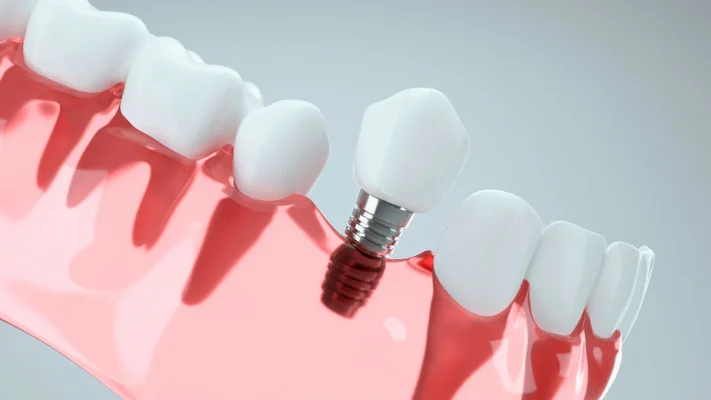
A dental implant is designed to replace the root of a missing tooth.
A small titanium implant is carefully placed into the jawbone. Once the implant has integrated with the bone, it can be used to support a replacement tooth, such as a crown. Implants can also be used to support bridges or dentures, depending on your individual needs.
Unlike a conventional bridge, an implant does not rely on the neighbouring teeth for support. This can make implants an attractive option for patients who want to replace a missing tooth while preserving the surrounding teeth.
Why might you consider a dental implant?
Losing a tooth can affect much more than the appearance of your smile.
You may find that you avoid certain foods, feel self-conscious when smiling or talking, or simply dislike the feeling of having a gap.
Dental implants can offer several potential benefits:
- They can replace a single missing tooth without relying on adjacent teeth.
- They can be used to replace several missing teeth.
- They can provide additional support for dentures.
- They are fixed in place rather than being removable.
- They can look and feel similar to a natural tooth when carefully planned and restored.
Could I have a dental implant?
One of the most common questions we hear is: “Am I suitable for an implant?”
There isn’t a simple yes or no answer without assessing you first.
Our Implant dentist – Dr Derek, will need to consider your overall oral health, the condition of the gums and remaining teeth, the amount and quality of bone available and your individual circumstances.
Good oral hygiene and healthy gums are particularly important. Any active dental disease or infection may need to be treated before implant treatment is considered.
In some cases, there may not initially be enough bone available to support an implant. If this is the case, additional procedures such as bone grafting may sometimes be considered.
This is why an implant consultation is so important. Rather than simply looking at the gap where a tooth is missing, Dr Derek needs to assess the whole situation and determine which treatment options are appropriate for you.
What does dental implant treatment involve?
Every patient’s treatment is different, but implant treatment generally involves several stages.
1. Consultation and assessment
Your first step is a consultation with our treatment co-ordinator and an assessment with Dr Derek.
This is an opportunity to discuss what you would like to achieve, examine your teeth and gums and consider whether an implant could be suitable.
Dr Derek will also explain the alternatives available to you. An implant isn’t automatically the best solution simply because a tooth is missing.
2. Detailed planning
If an implant is considered suitable, detailed planning will be required.
This may include dental X-rays and, where appropriate, 3D imaging to assess the bone and plan the position of the implant accurately.
The aim is to develop a treatment plan that is specific to your mouth.
3. Implant placement
The implant is placed into the jawbone, usually under local anaesthetic.
The implant then needs time to integrate with the surrounding bone before the final replacement tooth is fitted. The exact timescale varies between patients and depends on factors including the type of treatment being carried out.
4. Your replacement tooth
Once the implant has integrated sufficiently, the replacement crown, bridge or denture can be fitted.
Dr Derek will ensure that the final restoration is designed to work with your bite and remaining teeth as well as providing a natural-looking result.
How long does dental implant treatment take?
This is another question we are frequently asked.
Unfortunately, there isn’t one timescale that applies to everyone.
Some straightforward cases can progress relatively quickly, while more complex treatment can take considerably longer. If bone grafting or other preparatory treatment is required, this can add additional time.
The important thing is that implant treatment should not be rushed. There are several stages involved, and allowing the appropriate time for healing and integration is an important part of the process.
Are dental implants painful?
Implant placement is normally carried out using local anaesthetic, so you should not feel the procedure itself.
As with any surgical procedure, it is normal to experience some discomfort, swelling or tenderness afterwards. Your dental team will explain what to expect and provide appropriate aftercare advice.
If you are particularly nervous about dental treatment, make sure you discuss this during your consultation. Understanding exactly what will happen can make the process much less daunting and we can offer IV sedation if you’d rather.
What happens if I have had a missing tooth for years?
Having a tooth missing for a long time does not necessarily mean that you cannot have an implant.
However, the bone in the area of a missing tooth can change over time. This is one of the reasons why an assessment is important.
If there is insufficient bone to support an implant, additional treatment may sometimes be required before implant placement can take place.
Dr Derek will be able to explain what is possible in your particular case.
What if I don’t want a denture?
A removable denture is one option for replacing missing teeth, but it isn’t the only option.
Depending on the number and position of your missing teeth, alternatives may include:
Dental implants – fixed replacement teeth supported by implants.
Dental bridges – replacement teeth supported by neighbouring teeth or implants.
Dentures – removable replacement teeth.
The right option depends on your oral health, the position and number of missing teeth, your preferences and your budget.
A good consultation should therefore be about understanding your options rather than simply being told which treatment to choose.
Replacing a missing tooth in Ipswich
If you have a missing tooth and are considering dental implants in Ipswich, the best place to start is with a consultation.
At Christchurch Dental Practice, we can assess your individual circumstances, explain the options available to you and help you understand whether dental implant treatment could be appropriate.
You don’t need to have already decided that you want an implant before arranging an appointment. A consultation is an opportunity to ask questions, understand your choices and make an informed decision about your dental care.
Thinking about dental implants?
If you have a missing or failing tooth and would like to explore your options, contact Christchurch Dental Practice in Ipswich to arrange a consultation.
Christchurch Dental Practice
69 Fonnereau Road
Ipswich
Suffolk
IP1 3JN
Call our team on 01473 250977 to discuss your options.
Dental implant treatment is not suitable for everyone. Your suitability can only be determined following an appropriate clinical assessment.

Explore Our Dental Treatments




Get in contact now
Our practice video
Opening Hours
Monday - Friday: 8:30am - 5:00pm
Saturday: By appointment only

